
In this guide
- Record the exact panel family and interfaces
- Demonstrate the removal sequence
- Set a spares policy by exposure and lead time
- Inspect the repaired enclosure and update records
- Test a one-panel repair before deciding the spares kit
- Evaluate the first-year operating burden
- Preserve traceability for repair and later orders
- Translate the decision into a comparable request for quotation
- Plan evidence, interfaces and the final handover
- An owner handover gate for this asset
- Illustrative project exercise
- Conclusion
Procurement guidance by the HabKube project team. Examples and AI-generated images are illustrative, not documented customer deliveries or certified test results. Confirm technical and statutory requirements with qualified destination professionals.
Record the exact panel family and interfaces
Practical review questions
Ask for an as-built panel schedule with dimensions, core and facing specification, coating or color reference, edge profile, joint orientation and compatible trims. Link each record to a unit ID and wall elevation. The purchase order may name a generic prefab house wall panel, but maintenance needs the exact assembled part. Where profiles are proprietary, ask what happens if the factory changes its range. A replacement panel must match the support and weather detail, not merely fit the opening.
Identify openings, service penetrations and corner units separately. A flat middle panel may be simple to replace while a panel around a window has additional flashing and finishing steps. Retain the approved drawing and inspection photographs of concealed layers. If a structural function or fire-rated assembly is involved, require professional review before substituting a part. A color match after years outdoors may be imperfect even when the formulation is correct; record acceptable visual expectations in advance.
Demonstrate the removal sequence
Practical review questions
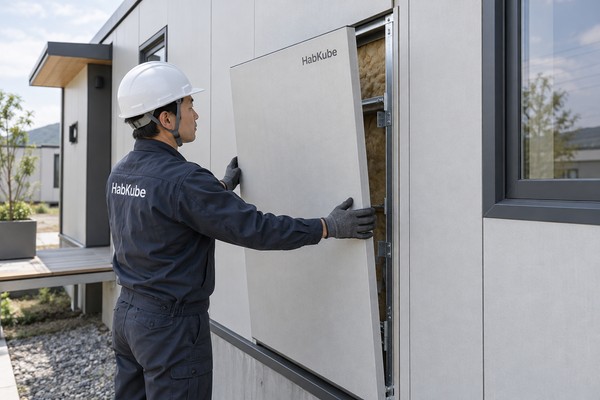
Ask how one damaged panel is released. Can its fasteners be reached from outside, or must interior finishes and adjacent panels be disturbed? How is the temporary opening protected from rain while work proceeds? Which seal and fastener parts are single-use? A simple demonstration on a representative mock-up reveals whether the repair method is realistic for the owner’s site. Include safe access and lifting where panels are large or high.
Do not make a maintenance team improvise cuts into the primary frame. A repair guide should show approved tools, edge treatment, removal order, fitting sequence and final inspection. If services pass through the panel, identify who disconnects and re-commissions them. If the unit may be relocated, mark the parts likely to be damaged during dismantling. The buyer can then decide whether to stock entire panels, joint components or only repair consumables.
Set a spares policy by exposure and lead time
Practical review questions
A remote camp with long freight lead times may need more local inventory than an urban office. Count critical panels by profile and exposure, not by a generic percentage of total wall area. Store panels in conditions that protect flatness, edges and finish. Label the original batch and the intended unit. Ask the supplier for reorder lead time, minimum order quantities and whether a small future batch can use the same profile. Keep this in the commercial evaluation; a cheap unique panel can create expensive future downtime.
Plan for other replaceable parts: trims, gaskets, sealant specification, fasteners and touch-up materials. A complete panel cannot be installed properly if its joint kit is unavailable. Where appearance matters, the owner may reserve a small original-batch stock. For projects with several phases, standardize approved details where possible while recording intentional variants. Spare stock is not a substitute for an accurate repair manual and competent installation.
Inspect the repaired enclosure and update records
Practical review questions
After a panel change, review alignment, weather seals, protective finish and any function affected by the opening. A local professional may need to inspect structural or fire-related work. The owner should photograph the finished repair and note part source, installer and date against the asset ID. Do not call the repair “equivalent to new” without evidence; the correct question is whether the installed result satisfies the approved requirement.
If the same damage recurs, investigate cause. Is a vehicle striking the wall, a drain overflowing, or a joint permitting water behind the panel? Replacing material alone may repeat the failure. Feed the finding back into later procurement. A maintained library of parts and repairs supports a long-term modular building program and makes the next order more precise. The supplier’s after-sales service can help identify components, but the destination owner controls site access, local safety and acceptance.
Test a one-panel repair before deciding the spares kit
A project-level decision exercise
Pick the most awkward likely replacement—not the easy center panel. It might sit beside a window, under roof flashing or around a service route. Ask the supplier to show the order in which trims, fixings and seals are removed, how the opening is kept dry and which adjacent parts are disturbed. Time and tool assumptions should be documented for the actual panel size, not borrowed from a different mock-up. This exercise shows whether the owner can realistically make the repair with available labor.
Next, simulate a replacement order several years later. What information must the owner send? Unit ID, elevation, panel position, profile, finish and any as-built change should be retrievable. Ask whether the supplier can make a single matching panel and what tolerance or color variation may be expected. If not, the owner may need an initial spare or a design using more commonly available components. Price the inventory and storage burden against the disruption caused by a delayed repair. There is no universal right quantity.
Finally, plan the acceptance of the repaired assembly. A panel may appear straight but have a poorly reinstated seal or missing protective treatment at a cut edge. The check should follow the same relevant detail as the original installation. Record the repair date and new component identity with the unit. If replacements are repeatedly needed at the same location, investigate impact, drainage or movement. An effective spares strategy is a controlled repair process, not simply a pallet of extra panels.
Evaluate the first-year operating burden
An implementation check for the buyer
Ask who will inspect, clean, adjust and repair the building after the installation team leaves. Map each relevant component to a safe access method and part reference. A feature described as low-maintenance can still be difficult to maintain if a panel must be removed to reach a seal or a service hatch is blocked by furniture. Give the operator the proposed instructions before buying, not only at handover. A practical maintenance review can identify design changes that cost little before manufacture and much more after occupancy.
Separate expected care from fault response. Routine cleaning and visual checks belong to an operating plan; a newly observed defect belongs to a documented investigation. The warranty should explain its scope without pretending that normal wear, local works and factory workmanship are identical. Define how the owner reports location, date and observed condition and how the supplier responds. For an export project, specify when a local qualified contractor is necessary and how spare parts reach the site. Avoid promising a universal repair time without understanding the destination.
Look for components likely to need replacement at different intervals. Exterior finishes, seals, mechanical equipment and the structural frame have different exposure and renewal paths. The buyer should ask for exact product references, available alternatives and compatibility constraints. A nominal service life for one material is not a forecast for the entire building. Record planned moves and potential changes of use, because both can alter wear and approval requirements. The best lifecycle plan is specific enough to use and humble enough to be revised from actual observations.
Project brief
Add spares to the original panel schedule
Send HabKube your unit mix, remote-site constraints and desired repair approach. Ask for traceable panel and joint information.
Get a project quote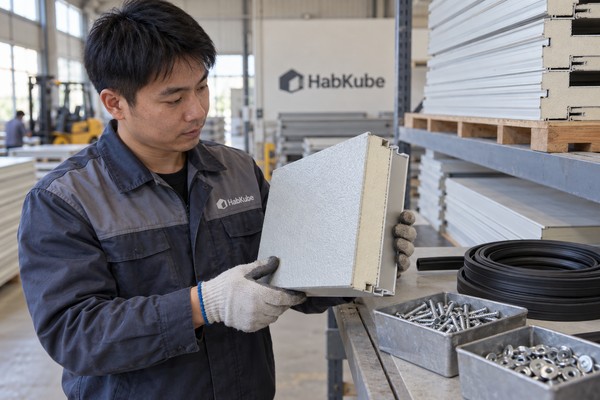
Preserve traceability for repair and later orders
An implementation check for the buyer
Assign a unique ID to each supplied unit and connect it to the final drawings, component schedule, inspection evidence and location history. If the product changes during a multi-unit order, note which units received each revision. This prevents a maintenance contractor from ordering a replacement that matches the brochure but not the installed profile. Preserve photographs of concealed joints and service routes before closure. Documentation should be searchable by component and location, not just a large unnamed photo folder.
Agree how a proposed repair is approved. Simple consumable replacement may follow the manual; a changed structural connection, fire boundary or local utility interface may need professional review. Describe the safe work sequence, temporary weather protection and inspection after completion. If the owner replaces a panel or fastener with an alternate part, record the specification and reason. After repeated failures, examine the underlying design and use conditions instead of merely sending another spare.
Use service data to improve the next purchasing brief. Note which issues were caused by transport, installation, operation or component design, and preserve uncertainty where cause remains unclear. A manufacturer should not be credited for a field intervention it did not perform, and an owner should not blame factory supply without evidence. This discipline builds trust and creates better repeat specifications. When a unit is moved or resold, pass on the relevant history and original limits so the next site can make an informed decision.
Translate the decision into a comparable request for quotation
An implementation check for the buyer
Write an RFQ around the decision in this guide: record the exact panel family and interfaces. State the application, destination, intended duration, quantity, site information available and the date by which an approved configuration is needed. Attach one controlled drawing register and name the assumptions that are still open. Ask every bidder to mark each requirement as included, optional, excluded or awaiting buyer input. This is more useful than asking for an all-in figure when the material, factory scope, local work and freight basis may differ. A lower bid can then be traced to an actual difference rather than an unexplained total.
Request a line-item scope for product, finishes, factory checks, export packing, freight, site support and commissioning where relevant. Agree the named delivery place, currency, quotation validity, proposed schedule and change method. Where a calculation or certificate is needed, ask who will provide it and whether it applies to the proposed configuration. A product catalog can help narrow options; it should not be used as the contractual design. The buyer should keep a list of decisions whose late change would affect tooling, dimensions, components or local approval. Put a release owner and deadline beside each one.
Compare supplier answers in a matrix with columns for proposal, evidence, exception, owner and next decision. Record whether an answer is a measured fact, a quoted option, a preliminary assumption or an issue reserved for a destination professional. For prefab house replacement panels, that distinction matters because commercial language can sound final before the site design is ready. Ask the supplier to explain the basis for any performance or delivery claim. The result should be a decision record the purchasing, technical and installation teams can all understand, not an email chain that only its original authors can interpret.
Plan evidence, interfaces and the final handover
An implementation check for the buyer
Make an evidence list for the risks described above, especially demonstrate the removal sequence. Identify what can be checked at material receipt, during factory production, before shipment and after installation. Those stages do not prove the same things. A visible factory mock-up can confirm geometry and workmanship; it cannot certify a complete building or replace the destination authority. If a report is offered, match its specimen, method, configuration and date to the current order. For each unresolved issue, record the specialist or authority that will decide it and the latest practical decision gate.
Divide responsibility at physical interfaces. Factory-supplied parts, foundations, local structural connections, service terminations, import clearance and occupancy approvals may belong to different parties. Put one owner and one acceptance record beside each interface. Sequence delivery so the site can receive, unload and protect the package safely. Match labels and loose hardware to assembly drawings, and provide receiving staff with dimensions, weights and inspection points before the truck or container arrives. Report transport damage promptly against package IDs while the original condition can still be reconstructed.
At handover, retain approved and as-built drawings, product references, relevant inspection records, operating limits, maintenance instructions and written warranty scope. Link them to actual unit IDs. Identify who can make a later change and when local professional review is needed. Ask the operator to review the building after its first period of use, noting access conflicts, leaks, unexpected wear or service difficulty relevant to this topic. Resolve the underlying cause before duplicating the detail in a later order. This is a practical learning loop, not a claim that a hypothetical example is a delivered HabKube project.
An owner handover gate for this asset
An implementation check for the buyer
Before accepting the building, the owner should be able to locate each maintainable item discussed here and the instruction for inspecting or replacing it. Ask a facilities representative to use the record without coaching from the original project team. If the part cannot be identified or reached, the documentation or design needs work before the file is considered complete.
Set a first review point tied to the unit’s actual use and exposure. Record condition, actions and component changes against its ID. Do not infer a universal service interval or remaining life from a marketing claim. The purpose of the review is to spot an access, drainage or parts problem early enough to improve both the asset and any later order.
Illustrative project exercise
Use this example to test the decision
Illustrative review: a site owner needs one panel after impact damage but the original order recorded only “white sandwich panel.” The repair is delayed while profile and finish are rediscovered. A panel schedule, labeled spare joint kit and removal guide would turn the problem into a planned replacement. This is not a documented HabKube customer case.
External reference
Use the right reference for the right decision.
Use the approved configuration and destination requirements as the inspection basis; a factory photograph is not a substitute for a reviewed assembly or code approval.
Read ICC off-site fabrication provisionsConclusion
Clarity before commitment.
The best time to plan a panel repair is before the first shipment. Document interfaces, supply routes and replacement sequence while the design team and original parts are available.
Related HabKube resources
Ready when you are
Request a panel aftercare discussion
Email info@HabKube.com with drawings or photos, unit quantity and destination. We can discuss replacement identification and documentation.
Send your requirementsCommon questions
Before you request a quote.
Should I order spare panels immediately?+
Consider location, exposure, commonality, storage capacity and reorder lead time. At minimum, buy or retain the exact component identification and repair method.
Can a different brand of panel be used?+
Only after compatibility with supports, joints, required performance and local approval is reviewed by the responsible technical parties.
What information belongs in a repair guide?+
Part identity, removal sequence, seals, fixings, safety/access needs and post-repair inspection.
Will replacement panels match the original color?+
Weathering and batch variation may prevent an exact visual match. Agree appearance expectations and consider spare stock where this matters.